

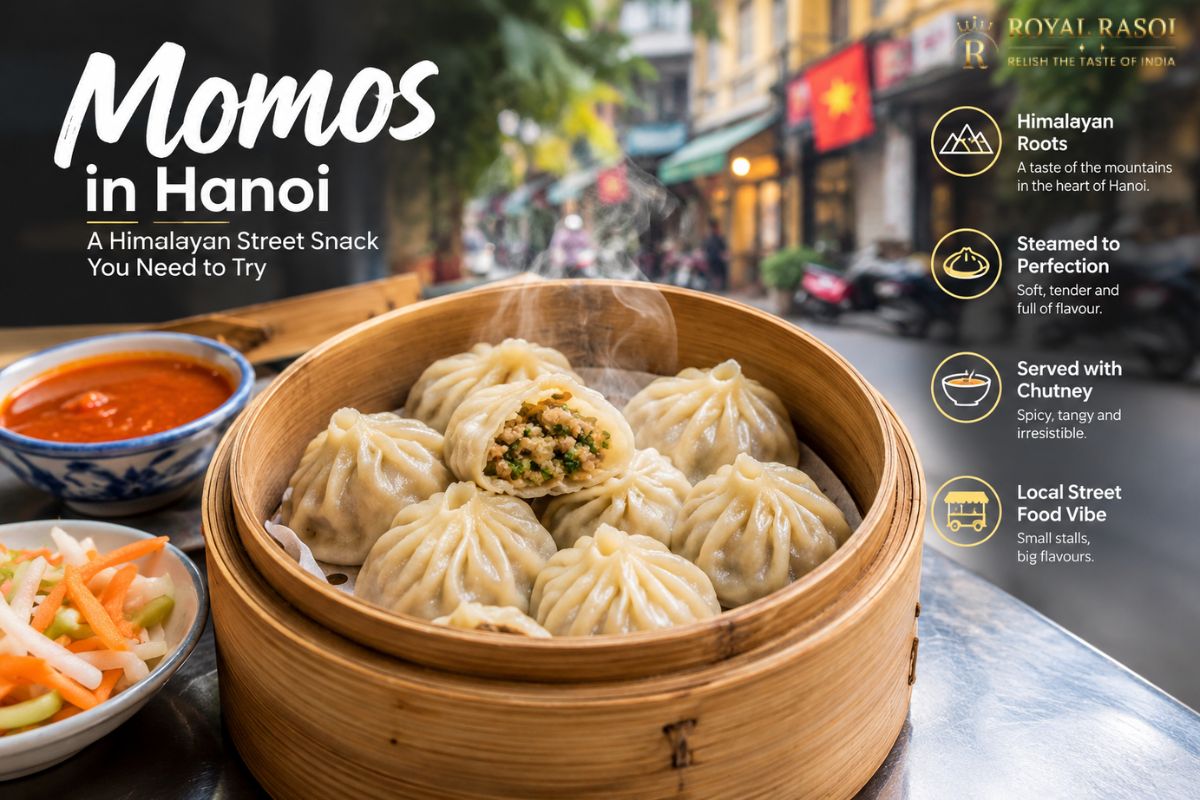
Momos in Hanoi: A Himalayan Street Snack You Need to Try
Momos are Himalayan dumplings that are traditionally steamed and come with a sauce that’s spicy. You can eat them at either Nepali or Tibetan restaurants in Hanoi as well as at some of the best Indian eateries. This guide will tell you about the origins of the dish, the types of momos to order, and how the dish compares to the local street food.
Key takeaways
- Momos are dumplings from the Himalayas that can be steamed or fried. They are usually offered in Nepali, Tibetan, or Indian restaurants in the city.
- There are options for vegetarian and paneer fillings, but vegetarians must inquire about the ingredients in the broth.
- You get around six to ten pieces in one serving, which means that one order is basically a snack, while two orders could make for a light meal.
- Ensure that you get chutney on the side to regulate the spiciness of your dish.
What are momos?
Momos are small dumplings wrapped in a thin flour wrapper with a filling. Most are steamed. Some are fried, grilled, or served in soup.
The kitchen shape varies from kitchen to kitchen. Some round pouches may be pinched at the top, some may have half-moons with pleated edges, or some may form small knots. They are small bites, typically eaten by hand, and served between bites with chutney.
Therefore, momos serve as a snack in the Himalayas, as a light lunch or as a late-night meal after a long trek. That flexibility is a big part of why the dish travelled so well.
Where do momos come from?
The word momos originates from Tibetan for a steamed dumpling. From there, they spread amongst the Tibetan populations to Nepal, Bhutan, Sikkim, Darjeeling, and Ladakh. The Newar community, living in the Kathmandu Valley in Nepal, is credited with making them an everyday food.
Each region changed the recipe. The traditional Tibetan momos are served with mild seasoning of yak or beef. Nepali versions include cumin, coriander, and ginger, and sometimes a tingly pepper called timur. Street vendors in India, particularly in the hill towns and in Delhi and Kolkata, added chicken, paneer, and vegetables to the dish, adding a loud garlicy red chutney.
Finally, the final one is the version that the majority of Indian travelers would expect to find in international travel.
What fillings are common?
Fillings are dependent on the type of cook and supplies available. The usual ones are:
- Minced and seasoned with ginger, garlic, and spring onion, Chicken
- Lamb or buffalo (more popular in Nepali and Tibetan cuisines)
- Mixed vegetables (mainly cabbage, carrot, and onion)
- Paneer, optionally with capsicum.
- A new hit at the café is corn and cheese.
- Mushroom or soya (available in some vegetarian kitchens),
Moreover, the filling should be juicy, but not watery. If the dumpling gets saggy or leaks a little when you lift it, it means that the filling is too wet or the wrapper is too thin.
How are momos cooked?
The texture differs more with the way it's cooked than with the filling.
- Steamed momos are the traditional ones. The wrapper bends and stretches slightly, and the filling remains plump.
- Fried momos are crispier in texture and tastier than the momos eaten raw. They are ideal for those who don't like the taste of steamed dumplings.
- Kothey (momos) are steamed and then browned on one side, giving a soft top and crisp base.
- The tandoori momos are marinated in a spiced yoghurt and finished in a tandoor, giving them a smoky flavor.
- The jhol momos are served in a thin, tangy sauce (typically tomato and sesame) and are eaten with a spoon.
- Onion and capsicum are added to a sticky Indo-Chinese sauce and then tossed with chilli momos.
For first plates, opt for steamed ones. The filling can be savoured and can be heated with the chutney.
What do momos taste like, and which chutneys come with them?
Steamed momos will taste gentle – the filling is ginger, garlic, and just a little bit of salt. The chutney provides the zing.
The basic red chutney is made of tomato, garlic, dried red chillies, and may include sesame. It may burn, so use a little at a time. A green mint and coriander chutney is also often served at Indian restaurants; it is more refreshing and pungent. Some cafés offer a less intense dip that uses mayonnaise.
In the case of Tibetan-style plates, there may be a cup of clear broth on the side. If the chilli gets the better of you, sip it between bites.
Why are momos catching on in Hanoi?
Dumplings are already Hanoi's favourite food. Many of the meals here are steamed buns, rice rolls and fried parcels, so the wrapper isn't so foreign. The small table on a low chair also matches the eating style of the city.
The demand is complemented by visitors. After a few days of noodle soup, travelers from India and Nepal, as well as long-term residents of the area, seek familiar tastes. Other visitors who have had to settle for one of the handful of standard meals are glad to sample something different.
However, momos are not foods that are eaten in Vietnam. They are most commonly found in restaurants that already serve Indian, Nepali, or Tibetan food, and the menu is subject to change, so it's best to check in advance.
Where can tourists try momos in Hanoi?
Momos can be found at Indian restaurants that have a “snack bar,” Nepalese or Tibetan restaurants, and a handful of cafes, where they are incorporated into the fusion menu.
As a first-time visitor, it's likely you'll want to eat at a restaurant that understands your request for Indian food, labels vegetarian options and offers you the option of how spicy it is you want it to be. Decor and location are not the most important of those three things.
Before you travel across the city, do a quick check:
- Check out the latest photographs on Google Maps. Hand-pleated momos appear shoddy and whimsical.
- Ask if momos are served regularly or if they are special.
- Inquire whether dumplings are prepared in the kitchen or frozen.
Furthermore, if you are looking for the best Indian restaurant in Hanoi for tourists, go for Royal Rasoi. Please check the current menu before leaving, as menus may vary.
What should you expect when ordering?
A standard plate will have 6 to 8 pieces, although this can differ. One plate is a single serving of food or 2 servings as a starter. If two people want to eat a full meal, they should get one dish each, or have curry and bread.
Momos are hot, and the steam is burning. Wait until one of them has cooled before biting into it. It is best to eat them before they get mushy as they cool down.
When ordering at a counter that doesn't have an English menu, show a picture and say "steamed" or "fried". The majority of staff will comprehend. If you are not sure about spice, request chutney to have on the side.
Which momos work for vegetarians?
The common varieties include peas, mushroom, and paneer momos. Some restaurants also serve corn and cheese momos.
It may be important to inquire further since the use of fish sauce in Vietnamese cooking is quite common, and some of the sauces or broths may contain fish sauce:
- Is the stuffing completely vegetarian?
- Is the steamer shared with chicken or mutton momos?
- Is the oil used for frying shared?
- Is the broth made from meat stock?
Purely vegetarian kitchens can deal with most of these problems. If you plan to consume vegetarian food for several days, finding the best Indian vegetarian restaurants in Hanoi will eliminate the element of guesswork, as no questions need to be asked regarding various dishes. Look for menus that label vegetarian dishes and check reviews from people who have tried vegetarian food.
How do momos compare with other Hanoi street foods?
Vietnamese street food tends to rely on fresh herbs and slightly sour sauces, while momos are usually spiced with garlic, chillies, and a range of warm spices.
| Snack | How It Differs From Momos |
|---|---|
| Bánh bao | Bánh bao is softer, fluffier, and often slightly sweeter, while momos have thinner wrappers. |
| Bánh cuốn | Bánh cuốn uses steamed rice rolls, while momos are heavier and usually served with spicy dip. |
| Nem rán | Fried momos are doughier and generally less greasy than Hanoi’s deep-fried spring rolls. |
| Phở / Bún chả | Momos are a snack, while phở and bún chả are more filling noodle-based meals. |
| Bánh mì | Momos are served hot on a plate, while bánh mì is commonly eaten on the go. |
What about chaat and other Indian snacks?
Chaat is like a part of Momos' food culture. Small, messy, sharp-tasting plates to share between people. Indian tourists looking for momo are also interested in having some crispness along with it.
To find the best place for Indian chaat in Hanoi, do some research on it just like you would when looking at momo restaurants - is there a homemade version of these dishes available here?
A hot cup of masala chai along with Chaat and Momos is an excellent choice for dinner time. Keep them small because these meals are more filling than their appearance suggests.
Practical tips for first-time orders
- Start with steamed momos. Go for fried food or tandoor dishes after knowing about kitchens.
- Get some chutney on the side to regulate temperature.
- Share a plate between two people before you order another one.
- Pair momo with masala chai, a refreshing lime soda, or clear broth. Chili tastes better when you drink sweet beverages.
- Eat momos fresh. Steamed-cooked takeaways don't last very long on their way home.
- For vegetarians, inquire about steaming vegetables, cooking them with oil or broth prior to purchasing from a store.
- Carry small notes. Cash is preferred by many snack vendors and small eateries.
Bottom line
Momos can provide you with a delicious and filling experience of the Himalayas without having to leave Hanoi. Begin by ordering steamed momos, then add chutney gradually, and remember to ask about the filling if you are a vegetarian.
If you are creating a list of foods in the city, note that the best Indian restaurants in Hanoi distinguish themselves by their attention to detail. In particular, they offer fresh chutneys, the right level of spices, and a menu that is easy to understand. Royal Rasoi is a great place to try momos, chaat, or a large vegetarian menu.
Frequently asked questions
1. Are momos Indian or Tibetan?
Momos are Tibetan in origin. The dish came to India via the Himalayan hills, where it was sold as an Indian street food item filled with various spices and sauces.
2. Can I find momos in Hanoi?
Yes, mostly Indian, Nepali, and Tibetan-style eateries as well as some coffee shops. Menu items change; please look at the latest pictures and contact us before visiting.
3. How many momos are in one plate?
Typically there are six to eight, but sometimes up to ten at a time. A single plate is for snacks. A couple of them may use this for an introductory purpose.
4. Are momos healthy?
Steamed momos are less heavy compared to fried ones. The filling, wrapping, and chutney are changed to pictures; therefore, they should be considered snacks instead of meals.
5. Are momos vegetarian?
Not always. Chicken and mutton are used as filling for many foods. There are vegetable, paneer, and mushroom variations available; however, you should inquire about common steamer types and broths used for them.
6. What is jhol momo?
Steamed dumplings are served on top of Jhol momo, which is an Indian cuisine from Nepal that has a thin, tangy gravy usually made out of tomatoes and sesame seeds. It is eaten by you using a spoon.
7. Are momos spicy?
The dumplings are mild. The heat is generally due to the red chutney; therefore, you should take some of that as a side dish and add it gradually.
8. What goes well with momos?
Masala chai, lime soda, and clear soup are effective. If you're looking for something crispy and sour to eat at the same time as chaat, then it would be perfect.